
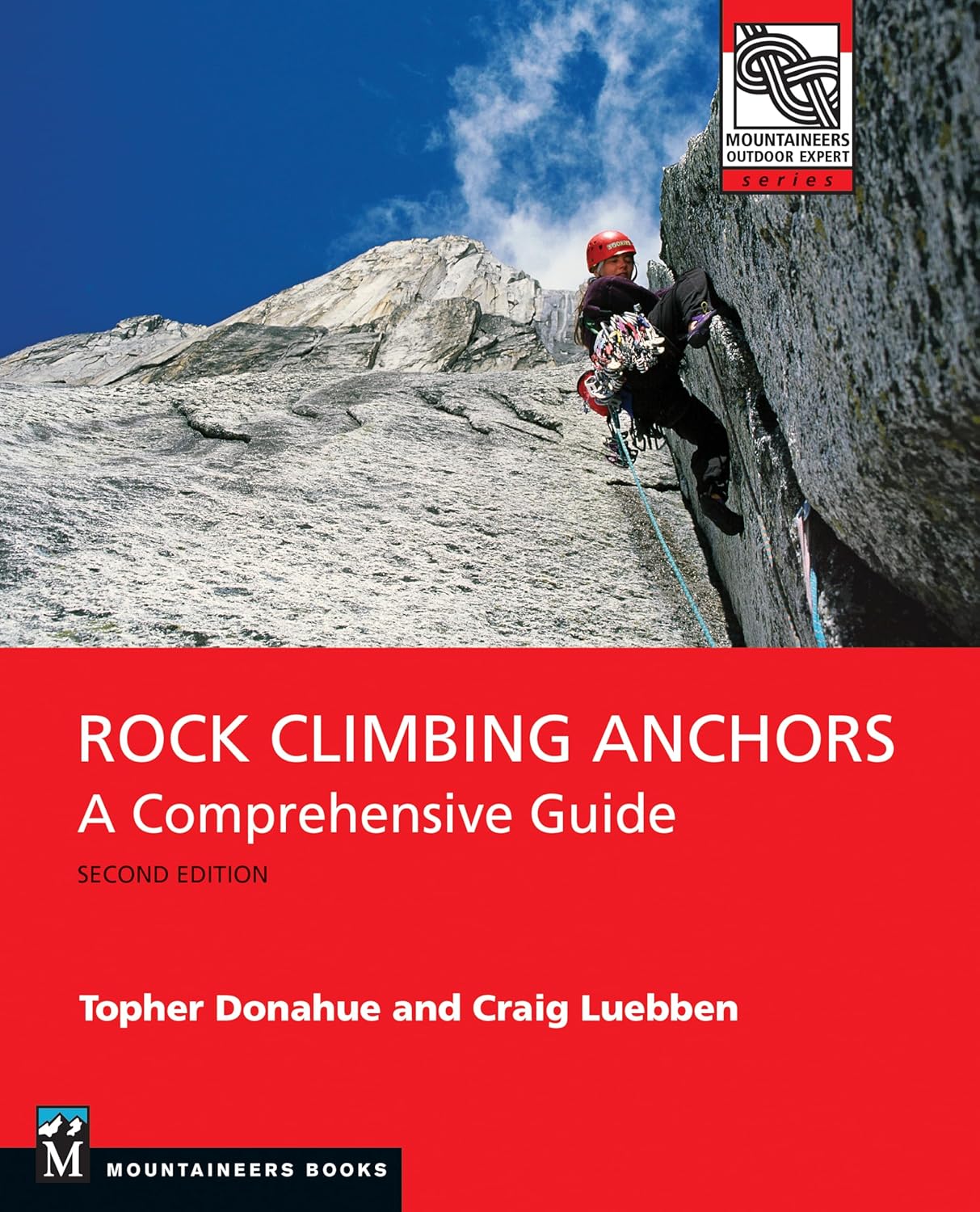
Rock Climbing Anchors, 2nd Edition: A Comprehensive Guide (Mountaineers Outdoor Expert)
$24.95
“Rock Climbing Anchors provides a whole and profusely illustrated course of instruction that can show to be of life-saving worth for all mountaineering fans from absolutely the novice to the seasoned skilled.” — Midwest Guide Evaluation
Seminal guide up to date by writer of the acclaimed Superior Rock ClimbingEasy-to-follow step-by-step instructions400 new coloration images display strategies For this re-creation of Rock Climbing Anchors, climber and author Topher Donahue rigorously reviewed every method and lesson, making them even simpler to know and study. Key updates embody: Improved content material hierarchy, studying effectivity, and method emphasisPros vs. Cons comparability listsTechnological advances and modifications in gear and standardsGraphic illustrations of forces, motion, “proper” vs. “flawed” method, and moreNew part on anchor concerns for the climbing gymNew distinction between “anchor” and “placement” or “piece”
From the Writer


From Chapter One: Anchor Fundamentals
One of many beauties of mountaineering is its superb variety. Sea cliffs, excessive alpine faces, desert towers, water-carved canyons, random crags within the woods: the geographical prospects are countless. You can even change the angle, from tip-toe friction slabs to putting vertical faces to gymnastic roofs and caves; or decide a crack of any measurement, from fingertips to chimneys. You may pursue boulder issues, eighty-foot sport routes, multi-pitch gear routes, or large partitions.
Then you have got the safety issue, starting from no-commitment high ropes to athletic clip-ups, and from splitter cracks that devour professional to dicey, runout, hardly ever climbed check items. And the way a lot effort do you need to spend? You may select from straightforward romps, full-throttle on-sights, and multi-day redpoint initiatives. Given all this selection, one factor stays frequent: most mountaineering (apart from bouldering and free soloing) depends on anchors for creating the security system.
— Topher Donahue
Pattern Lesson – Chapter Three, Chocks

In a pinch, you’ll be able to set a nut endwise to suit an even bigger crack, but it surely’s weaker. In strong rock, sideways placements are sometimes bomber as a result of the extensive surfaces in opposition to the rock end in extra floor contact.

In a horizontal crack, attempt to discover a gap at the back of the crack that means that you can slide the nut towards a constriction on the sting of the crack. Such a placement will be bomber. The piece proven is nice, offered it doesn’t get pulled to the left.

The crack has no constriction to withstand an outward pull, so the rope could wriggle the nut out, or the nut may come out in a fall. Even worse, it has very poor floor contact with the rock. If the rock breaks a little bit, the nut will fail.

This nut may pull the fractured block on the left facet unfastened. Watch out what you set your anchors behind. The nut additionally depends on a skinny, fractured layer on the appropriate facet.
Writer : Mountaineers Books
Publication date : April 1, 2019
Version : 2nd
Language : English
Print size : 288 pages
ISBN-10 : 1680511408
ISBN-13 : 978-1680511406
Merchandise Weight : 1.25 kilos
Dimensions : 6.8 x 0.7 x 8.4 inches
A part of sequence : Mountaineers Outside Professional


There are no reviews yet.